
Explainer · July 6, 2026 · 6 min · By Mireille Chastain
Visceral vs. Subcutaneous Belly Fat: The Pinch Test That Decides Whether Fat Removal Can Help You
Not all stomach fat is the same fat, and the difference is the single biggest predictor of whether liposuction or CoolSculpting will work for you. Here is how to tell which kind you have, why no procedure reaches the deep layer, and what actually shrinks it.
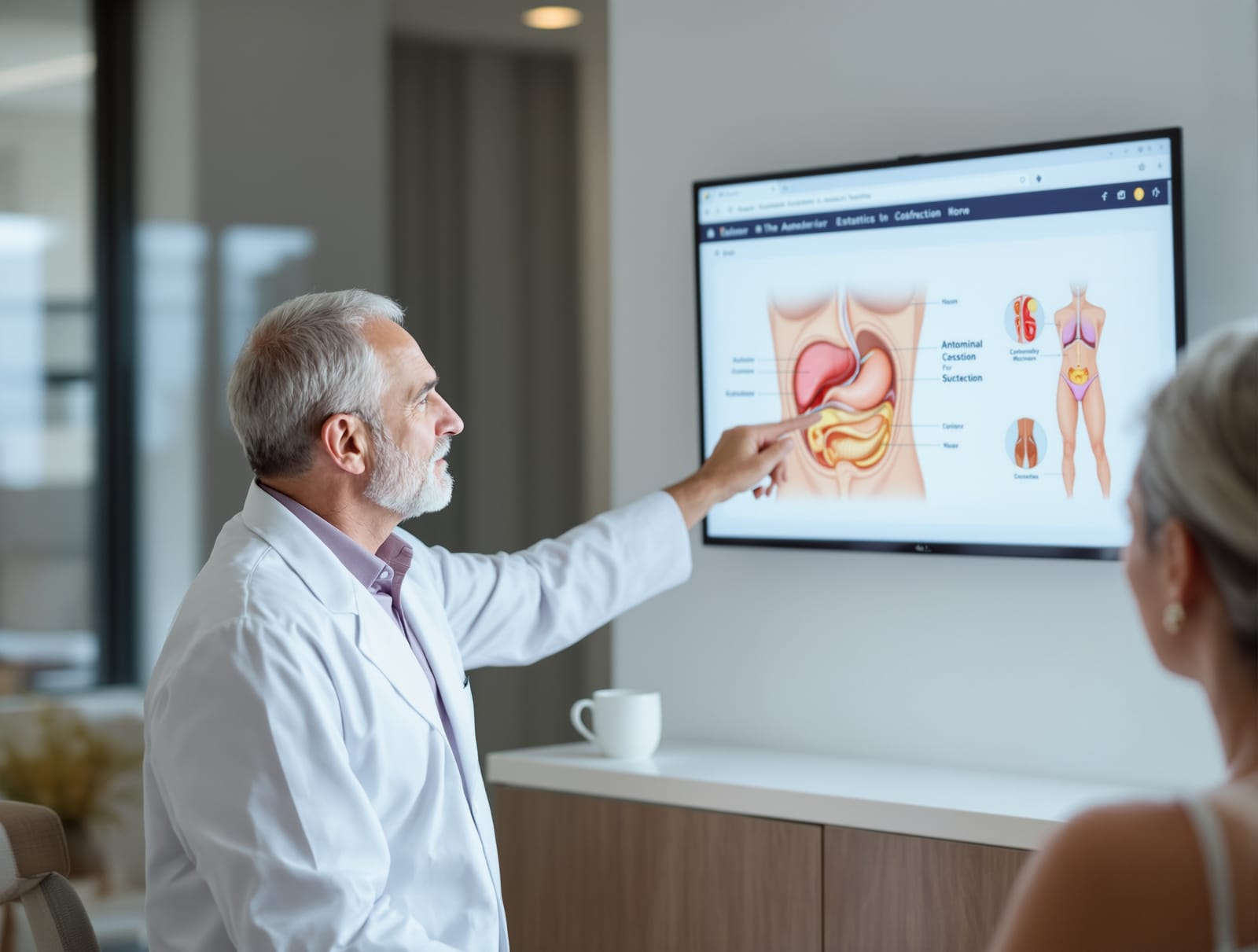
Every week, someone walks into a body contouring consultation with a firm, rounded abdomen and walks out disappointed, having been told that no procedure on the menu can help them. It is one of the most common and least understood outcomes in this field, and it comes down to a distinction that most marketing conveniently skips: your belly holds two entirely different kinds of fat, and fat removal technology can only reach one of them.
Two Fats, One Belly
Subcutaneous fat is the layer that sits directly under your skin, on top of the abdominal muscles. It is the fat you can grab between your fingers. It jiggles, it folds over a waistband, and it is the exclusive target of every fat removal procedure ever cleared or approved, from liposuction to cryolipolysis to injectable deoxycholic acid.
Visceral fat lives in a different neighborhood. It sits behind the abdominal muscle wall, deep inside the abdominal cavity, packed around the liver, intestines, and other organs. From the outside it produces the firm, distended, barrel-shaped abdomen often described as a hard belly. You cannot pinch it, because your fingers would have to pass through muscle to touch it. According to Harvard Health Publishing, visceral fat typically accounts for about 10 percent of total body fat, but it is disproportionately important for both your silhouette and your health.
The Pinch Test, and What It Tells You
Here is the honest self-assessment you can do before ever booking a consultation. Stand relaxed and grab the fullest part of your stomach. If you can gather a soft, substantial fold of tissue between your fingers, a meaningful share of your belly is subcutaneous, and contouring procedures have something real to work with. If your abdomen is large but firm, and pinching yields only a thin layer of skin over a drum-tight wall, the volume is coming from visceral fat behind the muscle, and no cannula or cooling applicator will change it.
Most people have some of each, which is why a good clinician performs exactly this exam with their hands during a proper consultation rather than quoting a price from across the desk. The pinchable portion is treatable. The deep portion is not, and a practice that does not explain the split before taking your money is telling you something about the practice.
Why No Device or Cannula Reaches Visceral Fat
This is not a technology gap waiting to be solved. It is anatomy and safety. Liposuction works by passing a thin tube through the subcutaneous layer, above the muscle. Pushing that instrument through the abdominal wall into the cavity where visceral fat lives would mean navigating blindly among the intestines and major blood vessels, which is why it is never done. Cryolipolysis has the same boundary for a different reason: the applicator can only cool tissue it can draw between its panels, which by definition is pinchable subcutaneous fat. The Mayo Clinic is explicit that liposuction targets fat just under the skin and is not a treatment for obesity or a substitute for weight loss.
The Health Side of the Story
Here is the twist that surprises people: the fat you cannot remove surgically is the one your doctor worries about most. Visceral fat is metabolically active tissue that releases inflammatory compounds and fatty acids directly toward the liver, and higher amounts are linked to insulin resistance, type 2 diabetes, and cardiovascular disease. Subcutaneous fat, the kind procedures treat, is comparatively benign.
The distinction cuts the other way too. A landmark study published in the New England Journal of Medicine found that removing large volumes of subcutaneous fat with liposuction produced no improvement in insulin sensitivity, blood pressure, or other metabolic risk factors. Fat removal changes your shape, not your bloodwork. Anyone promising health benefits from a contouring procedure is selling past the evidence.
What Actually Shrinks Visceral Fat
The good news buried in all of this: visceral fat, the untouchable kind, is also the most responsive kind. It is typically the first fat the body mobilizes when you create a calorie deficit. Sustained dietary change, regular aerobic exercise, resistance training, better sleep, and less alcohol all measurably reduce visceral stores, often before the scale moves much. For patients with significant weight to lose, GLP-1 medications have added a powerful pharmacological tool that reduces visceral fat along with total weight. In other words, the deep belly responds to medicine and lifestyle, and the pinchable belly responds to procedures. Matching the tool to the tissue is the entire game.
How to Use This Before a Consultation
Do the pinch test at home and be honest about the result. If your belly is mostly firm, spend your money and effort on the approaches that reach visceral fat first, and revisit contouring later; you may find the pocket that remains afterward is exactly what a candidate for fat removal looks like. If your belly is mostly soft and pinchable, and your weight is stable, you are the person these procedures were designed for. And if a provider proposes liposuction or CoolSculpting for an abdomen they have not physically examined, keep your deposit in your pocket.
The Bottom Line
Fat removal procedures treat the fat you can pinch and nothing else. Visceral fat, the deep firm kind, is invisible to every cannula and applicator on the market, but it surrenders readily to diet, exercise, and weight loss medication. Figure out which fat you are carrying before you book anything, because the answer determines whether the right next step is a consultation or a lifestyle plan.
Related reading: Who is actually a candidate for fat removal?.