
Field Notes · July 18, 2026 · 6 min · By Arjun Devabhaktuni
Do You Really Need Lymphatic Massage After Liposuction? What the Practice Is For
Manual lymphatic drainage is required by some surgeons and shrugged off by others. Here is what the massage actually does during recovery, when it earns its place, and how to tell a useful protocol from an upsell.
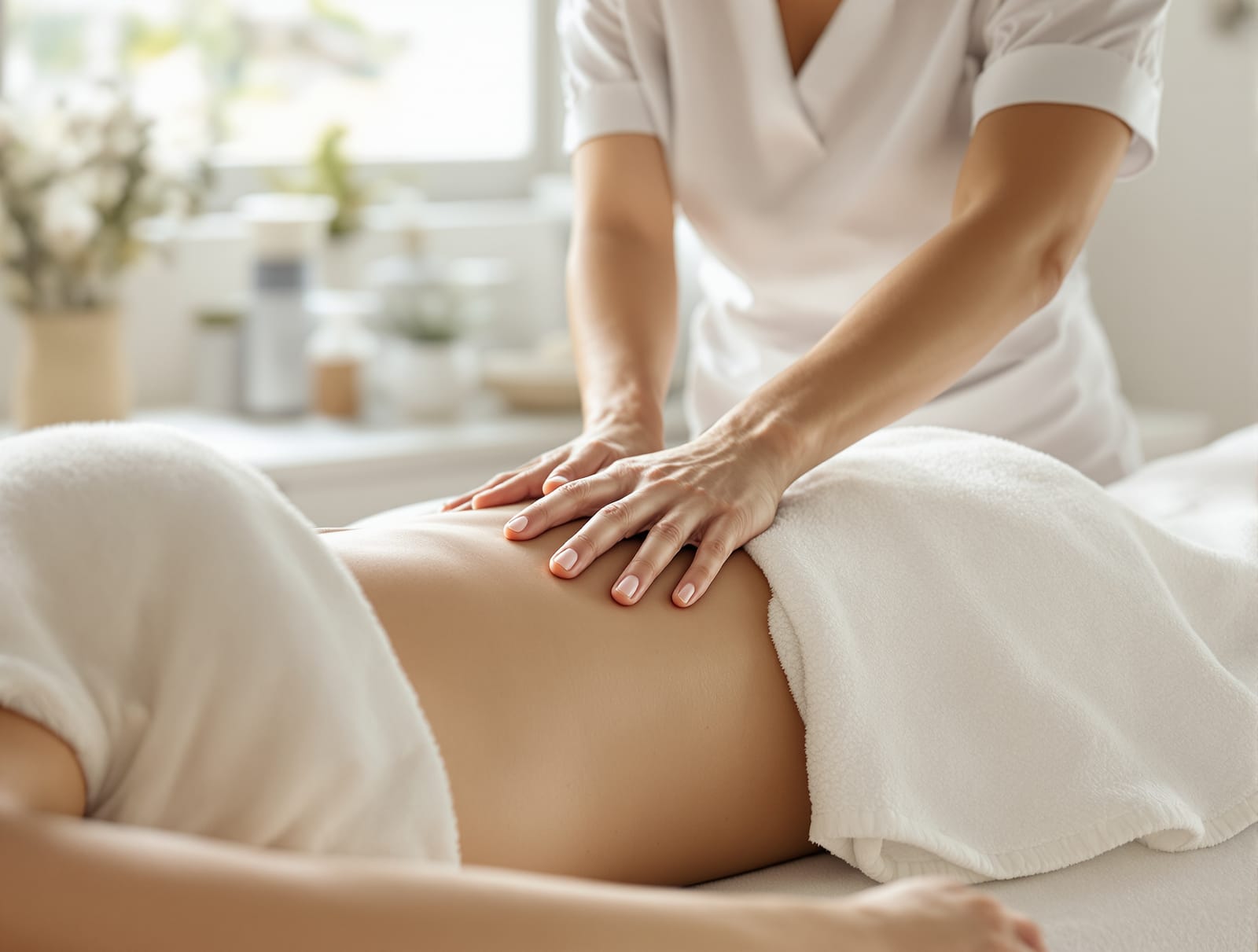
Ask three liposuction patients whether they had lymphatic massage during recovery and you may get three different answers: one who was told it was mandatory, one who was offered it as a paid add-on, and one whose surgeon never mentioned it at all. That inconsistency confuses people, because a treatment that is essential in one practice and absent in another cannot be both. The honest picture is that manual lymphatic drainage has a real, modest role in liposuction recovery, and understanding what it does clears up when it is worth your time and money and when it is not. It sits right alongside the two aftercare tools every patient does need to understand: compression garments and a realistic recovery timeline.
What Lymphatic Drainage Massage Actually Is
Manual lymphatic drainage, often shortened to MLD, is a light, rhythmic form of massage that uses gentle skin-stretching strokes rather than deep kneading. It is designed to encourage the movement of lymph, the clear fluid that circulates through the lymphatic system and carries waste and excess fluid back toward the bloodstream. The lymphatic system has no central pump the way the circulatory system has the heart, so it relies on muscle movement, breathing, and external pressure to keep fluid moving. MLD is essentially a way to nudge that flow along by hand. The pressure is deliberately soft, which surprises patients expecting a vigorous sports massage. Done correctly, it should never hurt.
Why Surgeons Recommend It After Liposuction
Liposuction leaves behind a network of small tunnels where fat used to be, and the body responds by sending fluid to the area as part of normal healing. That fluid is what makes patients swollen and firm for weeks, and if too much of it pools in one place it can form a seroma, a fluid pocket that sometimes has to be drained in the office. The theory behind post-liposuction MLD is straightforward: by encouraging fluid to move out of the treated area and toward working lymph nodes, the massage may reduce swelling, ease the tightness and bruising, and help the tissue soften more evenly. Many surgeons also believe it helps break up the small firm nodules and areas of hardness, called fibrosis, that can develop under the skin as the tissue heals. Patients frequently report that the treated area simply feels better and looser after a session, and that subjective relief is a genuine part of the appeal.
What the Evidence Does and Does Not Show
Here is where honesty matters more than enthusiasm. The rigorous evidence base for MLD after cosmetic liposuction is thin. Much of the strongest research on lymphatic drainage comes from treating lymphedema, a chronic swelling condition, rather than from elective body contouring, and the two situations are not identical. For liposuction specifically, most support is clinical experience and patient-reported comfort rather than large controlled trials proving it changes the final contour. That does not make it worthless. It means the accurate claim is that MLD can improve comfort and may speed the resolution of swelling, not that it determines whether your result is good. Neither the Mayo Clinic nor the American Society of Plastic Surgeons frames massage as the thing that makes or breaks an outcome; the fundamentals that do that are surgical technique, your skin quality, and disciplined compression.
When It Helps Most, and When It Is Optional
MLD tends to earn its place in larger-volume cases, in patients who are swelling significantly, and when the surgeon uses it as one part of a structured recovery plan rather than a stand-alone product. Timing matters too: most protocols start it a few days after surgery, once the surgeon clears it, and taper over the first several weeks as swelling naturally declines. For a small single-area procedure with minimal swelling, the marginal benefit is smaller, and many patients recover perfectly well without a single session. If your surgeon does not routinely recommend it, that is not necessarily a red flag; it may simply reflect that your case does not call for it. The key is that the decision should track your swelling and your surgeon's plan, not a spa's package pricing.
How to Spot a Useful Protocol vs an Upsell
Because MLD is often sold as a series of paid sessions, it is worth applying the same skepticism you would to any add-on. A useful protocol is prescribed and supervised by your surgical practice, performed by someone trained in post-surgical drainage rather than general relaxation massage, and framed honestly as comfort and swelling support rather than a guarantee of a better shape. Be wary of any pitch that makes a long, expensive package sound mandatory to avoid a bad result, or that promises the massage will tighten your skin or dissolve fat. It does neither. When you get your itemized quote, ask whether MLD sessions are included, recommended, or optional, and at what cost, exactly the line-item transparency our cost breakdown tells you to demand. A practice that answers plainly is treating you as a patient, not a subscription.
Doing It Safely
If you pursue MLD, get your surgeon's explicit clearance first, and use a therapist experienced with post-surgical patients who will coordinate with the practice. The pressure should be gentle, the incision sites should be respected while they heal, and the session should never be painful. Watch for signs that belong to your surgeon rather than your massage therapist: spreading redness, fever, a rapidly enlarging firm swelling, or increasing pain are reasons to call the office the same day, not to book another massage. Used within those boundaries, MLD is low risk. Pushed too hard or started too early, it is not.
The Bottom Line
Lymphatic massage after liposuction is a reasonable comfort measure with modest evidence, not the hidden key to a good result. It can reduce swelling, ease tightness, and make the healing weeks more bearable, especially after larger procedures. It will not tighten skin, remove fat, or rescue an operation that was not done well. Treat it the way you treat every other part of recovery: as one supporting tool inside a plan your surgeon designed, worth doing when it is indicated and easy to skip when it is not.
Related reading: Compression Garments After Liposuction: What They Do and How Long You Really Wear One.